TREATMENTS

Dental bridges are a trusted and effective solution to replace one or more missing teeth, restoring your smile and bite with natural-looking results. At our modern dental clinic, we design personalized bridge treatments that fill the gaps in your smile using high-quality materials and precise craftsmanship. Whether you're missing a single tooth or multiple teeth in a row, our experienced team ensures a secure and aesthetic fit tailored to your unique needs. From detailed consultation to digital design and seamless placement, we provide full care to restore both your confidence and oral function. Regain your ability to chew, speak, and smile comfortably with dental bridges that blend beautifully with your natural teeth.
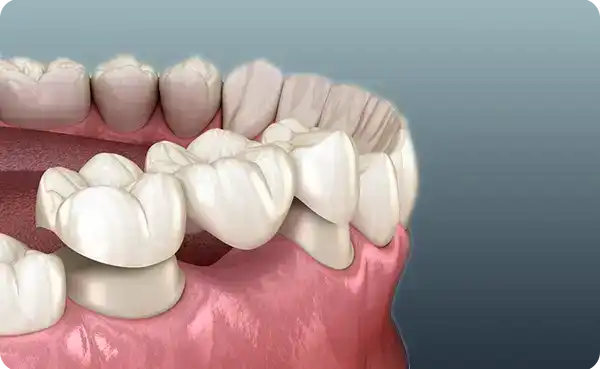
The teeth on both sides of the missing tooth are reduced in size to fix the bridge. It is the most common type of bridge.
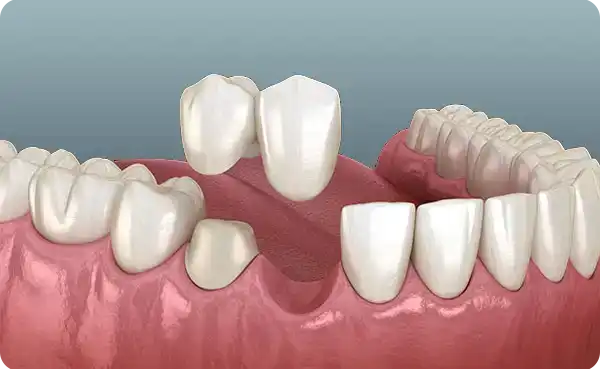
The bridge is fixed to only one tooth. It is preferred in anterior regions and is not very suitable for pressure.
 Average Length of Stay in Istanbul
-
Average Length of Stay in Istanbul
-
 Number of Visits Required
-
Number of Visits Required
-
 Recovery Time
-
Recovery Time
-
 Price
-
Price
-
 dental clinics istanbul
 dental clinic in istanbul turkey
 dental clinic in turkey
 dental turkey clinic
 best dental clinic in istanbul
 best dental clinic in istanbul
 dental clinic in istanbul turkey
 All on 4 Dental Implants turkey teeth reviews
 dental clinic in istanbul turkey
 dental venners in turkey reviews
 best dental clinic in istanbul turkey
 dental implants in turkey reviews
 best dental clinic in istanbul turkey
 best dental clinic in istanbul turkey
 sisli dental clinic
 implant dental clinic in istanbul
 turkish teeth
 best dental clinics in turkey
 dental implant clinics in istanbul
 Olha Hubych
Best dental clinic in Turkey! Very professional and efficient. Thank you so much, will come back!
Iceman Mike
Excellent experience I highly recommend, professional work and a lovely staff.
N RS
Dr Ufuk and Dr Catay and Dr Utku , Eva and Beyza are very nice, kind and helpful.
The office was extremely clean and high tech. The girls at the front desk all spoke perfect English and had the best prices.
I'm very happy with the service here and definitely recommend it.
Shahab
Honestly they are the best in Istanbul. I was a tourist and they gave me best price and a whole
warming welcome.
Highly recommend specially to tourists. They are highly educated and can speak in English easily…
Jason Allen Wear
If you’re looking to get dental implants or any other dental procedures done, this is the place to be!
From Day 1 the communication was top-tier. I’m super happy with my results and new smile. My expectations were exceeded by far!!!
I’d refer SOHO Dental Clinic to everyone anytime anywhere ⭐️⭐️⭐️⭐️⭐️ Super affordable as well ????
River Side
“I couldn’t wish for better dentists! From the moment you enter the big and great practice, you feel welcome – the entire team is warm, friendly, and highly professional. The consultation is detailed, clear, and honest, so you always feel you’re in the best hands.
We ourselves are physicians and doctors and know our way around, and after our experiences with the supposedly best German dentists in Stuttgart, we see an absolutely huge difference to the much more competent dentists in Istanbul, Türkiye.
The treatments are absolutely painless and carried out with the highest precision. I was especially impressed by the modern equipment and the excellent hygiene standards, which inspire trust.
What I appreciate most: they really take time for their patients – you never feel rushed. Even patients with dental anxiety are in the best hands here, as every concern is addressed with empathy and patience.
A dentist where competence, humanity, and quality go hand in hand – absolutely recommendable!”
Semhar Isaak
I traveled from USA and I had a very pleasant experience in Soho Dental. Good customer from all the staff top to bottom.
Kimberly Simms
My daughter and I went to Istanbul Turkiye to get dental treatments from Soho Dental Clinic.
We experienced excellent care, progressive and healthy options, top-tier customer service, and the perfect outcomes for both my daughter and me! I can't stop smiling!!
Amina Abdelwarth
I had a nice positive experience with Soho Dental Clinic. They treated me very well and professionally.
I was quite nervous of having the extractions and implants but everything was fully explained which gave me peace of mind and the procedure was pain free. I also received good aftercare and I will return soon to finish off the rest of the work.
Many thanks
Ven Saranin
Hi i'm From USA
I visited SOHO Dental Clinic for a second time, first time i visited 10 month ago they did it surgery and install implants, and all new fillings, on second visit they did crowns, and new smile, also routine check-up and cleaning, and I was very impressed with the service and care I received. The clinic was super clean and well-maintained, with modern equipment and a comfortable waiting area. All the workers was friendly and welcoming, and the dentist who treated me Dr. Ufuk was very professional and knowledgeable. They explained everything clearly and answered all of my questions, which made me feel at ease during the appointment,
also they identified a minor issue with one of my tooth that they were able to address immediately, which prevented it from becoming a bigger problem. I appreciated their attention to detail and their commitment to providing quality care.
The prices were also reasonable compared to other dental clinics in the USA, and the staff was able to provide me with a detailed breakdown of the costs before the treatment began.
I would highly recommend this dental clinic for anyone who looking for a professional, friendly, and affordable dental care experience in Istanbul.
Vladislav Bebchuk
A very good clinic. I had a tooth removed, and the doctor was very gentle, there was no pain at all. In addition, my wife is undergoing orthodontic treatment here, we are also happy with how it is going.
Also, my wife had veneers installation here, all was good and very gentle.
I highly recommend this clinic.
R M
I am very impressed by Soho Dental. For anyone international you will recieve the best customer service, Beyza the receptionist is phenomenal, she communicated perfectly on price, appointments and the work needed.
I am very happy with the dental work I have had done, the dentist and nurse worked together great as a team and will return on my next trip to Istanbul.
Last but not least this is a perfectly sterile and very modern clinic.
Marcin Wasik
My treatment in the Soho Dental Clinic was very good and I really enjoyed it. The staff who worked there during the time of my visit were very professional and helpful.
I have booked Soho clinic to visit them for the week doing top and bottom jaw in crowns.
They did a great job and everything was completed on time including picking from the airport to the hotel and the way back.
Excellent clinic service and affordable price. Highly recommended.
Thank you Soho
Amela Huskic
My father was a patient of Dr. Onur and he couldn’t give better compliments to both the Dentist and all of his staff!
They were very easy to communicate with and scheduling his services was a breeze.
I would recommend Soho Dental Clinic to anyone who wants good quality dental work done for a fair price!
Philip Henderson
I travelled from the UK for dental work but wasn't keen on the dentist that I had arranged.
After getting a second opinion here, I felt much more at ease. The dentist took the time to explain everything clearly and focused on preserving my natural teeth.
They managed to save a tooth that another clinic said had to be extracted, using a root canal and filling instead
I’m so glad I found this clinic and highly recommend them.
The employees spoke excellent English and the facilities were spotless and modern.
Tasha
I visited Soho Dental Clinic two times from Canada for my treatment and had an excellent experience both of those times. My treatment was complicated, requiring the removal of all of my teeth and the placement of all-on-four implants.
The three dentists responsible for my treatment (Dr. Onur Utku, Dr. Hakki Serdar, and Dr. Ufuk Agdasan) handled me with care and professionalism.
They responded to my questions with in-depth answers and didn’t rush me at any point.
Micha Davis
Soho Dental Clinic was top tier! I had such a great and easy experience. The staff was warm, welcoming, and very accommodating.
They thoroughly explained each step of the process and made sure that I was comfortable with the procedure.
There was also an English translator if I needed help with the language barrier. I highly recommend
Turki Chayma
I’ve been a patient of Dr. Ufuk Bey for almost 10 years, and I couldn’t be happier with the care I’ve received.
The clinic is in a great location, very clean, and beautifully designed with modern equipment. Dr. Ufuk is incredibly professional, kind, and detail-oriented—he always makes me feel comfortable and well-informed.
The entire team is friendly and efficient. Highly recommended for anyone seeking quality dental care in a top-notch setting!
Sal
Excellent service for dental implants, a very high quality dental clinic, puts the UK clinics to shame, prices are very reasonable, their equipment is very high quality, very friendly, located in the best part of Istanbul for shopping,.
Highly recommended.
Indira
I came from USA to do implants, I also had a bad overbite.
Soho dental clinic has done a lot for me to be happy.
I'm very satisfied with their work ,everyone is kind and they do their best to make patients satisfied .
D W
I found Soho through one of the many medical tourism websites. After 3 years of receiving less than quality care at the University of Iowa Dental clinics for implant treatment, which was very costly, I had no choice but to find care outside the USA.
Working with Soho Dental has been wonderful and easy. Communication was consistent, all my questions were addressed. Konul was there for me through emails or texts. I was always at ease. The pricing seemed too good to be true after what we pay in the US. Once I arrived, I was impressed by the office. It was large, new looking, modern with a kind staff. I was offered Turkish tea in the waiting room.
I finally got to meet Konul who is a complete delight! She ensured all the details were covered with the doctors and that I was comfortable.
I was very happy with the doctors and the entire team. After the initial consult, the surgery was next, THAT SAME DAY!
This would NEVER happen in the US, where I have never had even a cavity filled the same day. I felt like I was in great, expert hands. I now wait until the implant treatment is fully healed so that the crowns can be placed.
I feel lucky to have chosen SOHO Dental and I have a new friend, Konul :).
I am excited to go back to Turkey to explore the beautiful people and the country.
If you are in need of state of the art dental care and treatment, look no further, Soho Dental is the place.
Shadid Mahmood
This was my second time returning to The Amazing Soho Dental Clinic where the latest technology enabled the efficiency and accuracy of my treatment.
Following the Dentist Consultation was all cleared. Konul was always there to explain everything and available on what’s up 24/7 Amazing.
We are returning to the UK following the root canals and 9 implants treatments completed and New full mouth of permanent teeth fitted.
Extremely happy with the Dr's professionalism, skills and expertise in addition to very high clinic hygiene standards. The latest technology enables the efficiency and accuracy of any treatment.
Thank you for making my treatments as comfortable as possible.
The service was very professional. The members of staff at Soho Dental Clinic were All highly accommodating. I cannot fault the service.
I would recommend Soho Dental Clinic to everyone it’s worth the money well spent.
Angelika Hayslip
I would like to recommend and thank to SoHo Dental Clinic for make me smile again. The entire team doctors and stuff are amazing and so dedicated to their patients.
Ekaterina Fokina
I flew from Finland to get crowns done at this clinic. I didn't regret it. Excellent service, very attentive and courteous staff.
All the work was done in three days plus teeth whitening.
Thank you very much to Dr. Ufuk Agdasan. And special thanks to consultant Konul Hammoud.
I'll come back here again to do implants. I definitely recommend this clinic.
Basil
I came from the UK to Soho Dental Clinic 3 months ago to do a full mouth restoration, I have been nicely welcomed by all the staff at Soho Dental Clinic, their Clinic is very nice, clean and modernised.
I have done 16 Emax Veneers and 6 Emax Crowns, they were nicely done by Dr Ufuk who is genuinely the best Dentist I’ve ever came across, he’s very patient, professional, and unbelievably knowledgeable. He has done an amazing job that made a big beautiful smile on my face, I couldn’t ask for more.
Then I had to replace an old implant which was done elsewhere,
It was replaced by Dr Unur Utku who’s the best Surgeon and a gentleman who listens to his patients and makes sure that they leave the clinic with a big beautiful smile. The most important thing about replacing the implant was that I didn’t have any pain during the surgery or after it, as I had a bad experience with the previous surgery.
I’m so happy with my teeth and smile. I would highly recommend Soho Dental Clinic to everyone.
please do a proper research before going to Turkey and find the right clinic like I did, don’t hesitate to contact Soho Dental Clinic and ask them whatever you need to know. There’s no language barrier at Soho Clinic and specially the very helpful and friendly coordinators ( Konul & Rita ) who speaks many languages.
Many thanks to everyone at Soho dental clinic and will be back after 3 months to get the last crown done.
Judi Robertson
I was very nervous and wanted gas the dentist was so good gentle, caring and understanding. I was having 2 old fillings removed and replaced. She kept checking to see that I was going well.
Definitely the best dental experience that I have had
Noorah Mosselmani
My dad and I travelled from the United States to Istanbul so he can do full teeth implants. The doctors were very helpful for the initial consultation.
They went over all the x rays and explained what to expect. Everything was very efficient, office was clean and most importantly the doctors were honest about everything including money.
I highly recommend soho dental to anyone looking in istanbul
Jared Kohl
I interviewed 8 clinics. This one did the best from my consultant, to the doctors. They didn’t oversell any part of the procedures I asked for. It looks natural.
Chicago, IL to Istanbul.
Martin Haynes
I went to Soho Dental Clinic after initially going to Hospitaprime for my All on Six. I was reasonably happy after leaving Hospitaprime, but after a while, my teeth started to hit together, they were too large, also when talking saliva was coming through the top set, I just wasn't happy. I decided to get them made again & after some enquiries elsewhere, I chose Soho - from the outset dealing with Seray & Konul everything went smoothly. I had them made from Porcelain this time & not monolithic Zirconium, which are VERY heavy. I did chip one of the front teeth but had that repaired locally in the UK. I will say that my bite isn't quite right, but it's ok. Maybe if I go back sometime Soho will sort it for me. All in all, I wish I went to Soho first of all, it would of saved a lot of time & money, but hey ho, we live & learn. I would recommend Soho Dental without a problem, they listened to what I wanted & i got just that.
Yuriy Oliynyk
I was extremely satisfied with my visit to the dental clinic in Istanbul!
The service was outstanding from the moment I booked the appointment to the completion of the procedures. The staff were professional, welcoming, and attentive.
The dentist clearly explained each step of the treatment, answered all my questions, and recommended the best solution for my situation.
Olha Hubych
Best dental clinic in Turkey! Very professional and efficient. Thank you so much, will come back!
Iceman Mike
Excellent experience I highly recommend, professional work and a lovely staff.
N RS
Dr Ufuk and Dr Catay and Dr Utku , Eva and Beyza are very nice, kind and helpful.
The office was extremely clean and high tech. The girls at the front desk all spoke perfect English and had the best prices.
I'm very happy with the service here and definitely recommend it.
Shahab
Honestly they are the best in Istanbul. I was a tourist and they gave me best price and a whole
warming welcome.
Highly recommend specially to tourists. They are highly educated and can speak in English easily…
Jason Allen Wear
If you’re looking to get dental implants or any other dental procedures done, this is the place to be!
From Day 1 the communication was top-tier. I’m super happy with my results and new smile. My expectations were exceeded by far!!!
I’d refer SOHO Dental Clinic to everyone anytime anywhere ⭐️⭐️⭐️⭐️⭐️ Super affordable as well ????
River Side
“I couldn’t wish for better dentists! From the moment you enter the big and great practice, you feel welcome – the entire team is warm, friendly, and highly professional. The consultation is detailed, clear, and honest, so you always feel you’re in the best hands.
We ourselves are physicians and doctors and know our way around, and after our experiences with the supposedly best German dentists in Stuttgart, we see an absolutely huge difference to the much more competent dentists in Istanbul, Türkiye.
The treatments are absolutely painless and carried out with the highest precision. I was especially impressed by the modern equipment and the excellent hygiene standards, which inspire trust.
What I appreciate most: they really take time for their patients – you never feel rushed. Even patients with dental anxiety are in the best hands here, as every concern is addressed with empathy and patience.
A dentist where competence, humanity, and quality go hand in hand – absolutely recommendable!”
Semhar Isaak
I traveled from USA and I had a very pleasant experience in Soho Dental. Good customer from all the staff top to bottom.
Kimberly Simms
My daughter and I went to Istanbul Turkiye to get dental treatments from Soho Dental Clinic.
We experienced excellent care, progressive and healthy options, top-tier customer service, and the perfect outcomes for both my daughter and me! I can't stop smiling!!
Amina Abdelwarth
I had a nice positive experience with Soho Dental Clinic. They treated me very well and professionally.
I was quite nervous of having the extractions and implants but everything was fully explained which gave me peace of mind and the procedure was pain free. I also received good aftercare and I will return soon to finish off the rest of the work.
Many thanks
Ven Saranin
Hi i'm From USA
I visited SOHO Dental Clinic for a second time, first time i visited 10 month ago they did it surgery and install implants, and all new fillings, on second visit they did crowns, and new smile, also routine check-up and cleaning, and I was very impressed with the service and care I received. The clinic was super clean and well-maintained, with modern equipment and a comfortable waiting area. All the workers was friendly and welcoming, and the dentist who treated me Dr. Ufuk was very professional and knowledgeable. They explained everything clearly and answered all of my questions, which made me feel at ease during the appointment,
also they identified a minor issue with one of my tooth that they were able to address immediately, which prevented it from becoming a bigger problem. I appreciated their attention to detail and their commitment to providing quality care.
The prices were also reasonable compared to other dental clinics in the USA, and the staff was able to provide me with a detailed breakdown of the costs before the treatment began.
I would highly recommend this dental clinic for anyone who looking for a professional, friendly, and affordable dental care experience in Istanbul.
Vladislav Bebchuk
A very good clinic. I had a tooth removed, and the doctor was very gentle, there was no pain at all. In addition, my wife is undergoing orthodontic treatment here, we are also happy with how it is going.
Also, my wife had veneers installation here, all was good and very gentle.
I highly recommend this clinic.
R M
I am very impressed by Soho Dental. For anyone international you will recieve the best customer service, Beyza the receptionist is phenomenal, she communicated perfectly on price, appointments and the work needed.
I am very happy with the dental work I have had done, the dentist and nurse worked together great as a team and will return on my next trip to Istanbul.
Last but not least this is a perfectly sterile and very modern clinic.
Marcin Wasik
My treatment in the Soho Dental Clinic was very good and I really enjoyed it. The staff who worked there during the time of my visit were very professional and helpful.
I have booked Soho clinic to visit them for the week doing top and bottom jaw in crowns.
They did a great job and everything was completed on time including picking from the airport to the hotel and the way back.
Excellent clinic service and affordable price. Highly recommended.
Thank you Soho
Amela Huskic
My father was a patient of Dr. Onur and he couldn’t give better compliments to both the Dentist and all of his staff!
They were very easy to communicate with and scheduling his services was a breeze.
I would recommend Soho Dental Clinic to anyone who wants good quality dental work done for a fair price!
Philip Henderson
I travelled from the UK for dental work but wasn't keen on the dentist that I had arranged.
After getting a second opinion here, I felt much more at ease. The dentist took the time to explain everything clearly and focused on preserving my natural teeth.
They managed to save a tooth that another clinic said had to be extracted, using a root canal and filling instead
I’m so glad I found this clinic and highly recommend them.
The employees spoke excellent English and the facilities were spotless and modern.
Tasha
I visited Soho Dental Clinic two times from Canada for my treatment and had an excellent experience both of those times. My treatment was complicated, requiring the removal of all of my teeth and the placement of all-on-four implants.
The three dentists responsible for my treatment (Dr. Onur Utku, Dr. Hakki Serdar, and Dr. Ufuk Agdasan) handled me with care and professionalism.
They responded to my questions with in-depth answers and didn’t rush me at any point.
Micha Davis
Soho Dental Clinic was top tier! I had such a great and easy experience. The staff was warm, welcoming, and very accommodating.
They thoroughly explained each step of the process and made sure that I was comfortable with the procedure.
There was also an English translator if I needed help with the language barrier. I highly recommend
Turki Chayma
I’ve been a patient of Dr. Ufuk Bey for almost 10 years, and I couldn’t be happier with the care I’ve received.
The clinic is in a great location, very clean, and beautifully designed with modern equipment. Dr. Ufuk is incredibly professional, kind, and detail-oriented—he always makes me feel comfortable and well-informed.
The entire team is friendly and efficient. Highly recommended for anyone seeking quality dental care in a top-notch setting!
Sal
Excellent service for dental implants, a very high quality dental clinic, puts the UK clinics to shame, prices are very reasonable, their equipment is very high quality, very friendly, located in the best part of Istanbul for shopping,.
Highly recommended.
Indira
I came from USA to do implants, I also had a bad overbite.
Soho dental clinic has done a lot for me to be happy.
I'm very satisfied with their work ,everyone is kind and they do their best to make patients satisfied .
D W
I found Soho through one of the many medical tourism websites. After 3 years of receiving less than quality care at the University of Iowa Dental clinics for implant treatment, which was very costly, I had no choice but to find care outside the USA.
Working with Soho Dental has been wonderful and easy. Communication was consistent, all my questions were addressed. Konul was there for me through emails or texts. I was always at ease. The pricing seemed too good to be true after what we pay in the US. Once I arrived, I was impressed by the office. It was large, new looking, modern with a kind staff. I was offered Turkish tea in the waiting room.
I finally got to meet Konul who is a complete delight! She ensured all the details were covered with the doctors and that I was comfortable.
I was very happy with the doctors and the entire team. After the initial consult, the surgery was next, THAT SAME DAY!
This would NEVER happen in the US, where I have never had even a cavity filled the same day. I felt like I was in great, expert hands. I now wait until the implant treatment is fully healed so that the crowns can be placed.
I feel lucky to have chosen SOHO Dental and I have a new friend, Konul :).
I am excited to go back to Turkey to explore the beautiful people and the country.
If you are in need of state of the art dental care and treatment, look no further, Soho Dental is the place.
Shadid Mahmood
This was my second time returning to The Amazing Soho Dental Clinic where the latest technology enabled the efficiency and accuracy of my treatment.
Following the Dentist Consultation was all cleared. Konul was always there to explain everything and available on what’s up 24/7 Amazing.
We are returning to the UK following the root canals and 9 implants treatments completed and New full mouth of permanent teeth fitted.
Extremely happy with the Dr's professionalism, skills and expertise in addition to very high clinic hygiene standards. The latest technology enables the efficiency and accuracy of any treatment.
Thank you for making my treatments as comfortable as possible.
The service was very professional. The members of staff at Soho Dental Clinic were All highly accommodating. I cannot fault the service.
I would recommend Soho Dental Clinic to everyone it’s worth the money well spent.
Angelika Hayslip
I would like to recommend and thank to SoHo Dental Clinic for make me smile again. The entire team doctors and stuff are amazing and so dedicated to their patients.
Ekaterina Fokina
I flew from Finland to get crowns done at this clinic. I didn't regret it. Excellent service, very attentive and courteous staff.
All the work was done in three days plus teeth whitening.
Thank you very much to Dr. Ufuk Agdasan. And special thanks to consultant Konul Hammoud.
I'll come back here again to do implants. I definitely recommend this clinic.
Basil
I came from the UK to Soho Dental Clinic 3 months ago to do a full mouth restoration, I have been nicely welcomed by all the staff at Soho Dental Clinic, their Clinic is very nice, clean and modernised.
I have done 16 Emax Veneers and 6 Emax Crowns, they were nicely done by Dr Ufuk who is genuinely the best Dentist I’ve ever came across, he’s very patient, professional, and unbelievably knowledgeable. He has done an amazing job that made a big beautiful smile on my face, I couldn’t ask for more.
Then I had to replace an old implant which was done elsewhere,
It was replaced by Dr Unur Utku who’s the best Surgeon and a gentleman who listens to his patients and makes sure that they leave the clinic with a big beautiful smile. The most important thing about replacing the implant was that I didn’t have any pain during the surgery or after it, as I had a bad experience with the previous surgery.
I’m so happy with my teeth and smile. I would highly recommend Soho Dental Clinic to everyone.
please do a proper research before going to Turkey and find the right clinic like I did, don’t hesitate to contact Soho Dental Clinic and ask them whatever you need to know. There’s no language barrier at Soho Clinic and specially the very helpful and friendly coordinators ( Konul & Rita ) who speaks many languages.
Many thanks to everyone at Soho dental clinic and will be back after 3 months to get the last crown done.
Judi Robertson
I was very nervous and wanted gas the dentist was so good gentle, caring and understanding. I was having 2 old fillings removed and replaced. She kept checking to see that I was going well.
Definitely the best dental experience that I have had
Noorah Mosselmani
My dad and I travelled from the United States to Istanbul so he can do full teeth implants. The doctors were very helpful for the initial consultation.
They went over all the x rays and explained what to expect. Everything was very efficient, office was clean and most importantly the doctors were honest about everything including money.
I highly recommend soho dental to anyone looking in istanbul
Jared Kohl
I interviewed 8 clinics. This one did the best from my consultant, to the doctors. They didn’t oversell any part of the procedures I asked for. It looks natural.
Chicago, IL to Istanbul.
Martin Haynes
I went to Soho Dental Clinic after initially going to Hospitaprime for my All on Six. I was reasonably happy after leaving Hospitaprime, but after a while, my teeth started to hit together, they were too large, also when talking saliva was coming through the top set, I just wasn't happy. I decided to get them made again & after some enquiries elsewhere, I chose Soho - from the outset dealing with Seray & Konul everything went smoothly. I had them made from Porcelain this time & not monolithic Zirconium, which are VERY heavy. I did chip one of the front teeth but had that repaired locally in the UK. I will say that my bite isn't quite right, but it's ok. Maybe if I go back sometime Soho will sort it for me. All in all, I wish I went to Soho first of all, it would of saved a lot of time & money, but hey ho, we live & learn. I would recommend Soho Dental without a problem, they listened to what I wanted & i got just that.
Yuriy Oliynyk
I was extremely satisfied with my visit to the dental clinic in Istanbul!
The service was outstanding from the moment I booked the appointment to the completion of the procedures. The staff were professional, welcoming, and attentive.
The dentist clearly explained each step of the treatment, answered all my questions, and recommended the best solution for my situation.
Good question. Unfortunately, many patients who travel for their treatment face unethical practices in clinics they prefer such as getting bullied about surprise charges by clinics.
The plan and price we share with you are carefully prepared based on the photos, X-rays, or details and your expectations that you send us before your trip. When you arrive, we simply confirm everything in person with an examination before beginning your treatment.
Sometimes, however, a small detail that could not be seen in the photos or x-rays may show up during the clinic examination. For example, this might be the need to reinforce your bone tissue with grafting and sinus lifting procedure. Unlike most clinics that deal with international patients, the pricing and the possibility of these details are transparently shared with you in your treatment plan.
If that happens, we will explain it clearly, show you the issue, and discuss all the options with you before making any changes. Nothing is ever done without your agreement.
Your treatment plan and price will stay the same unless we discover something new during your check-up. Even then, we’ll decide together with you about your options before moving forward with any treatments.
Yes, of course. Our patients regularly travel from abroad, so we make sure you feel supported not only with your dental treatment but also with your stay in Istanbul. We can recommend trusted hotels close to our clinic, and if you prefer, we can also help arrange your booking.
Our goal is to make your trip as smooth and stress-free as possible, so you can focus on your treatment and enjoy your time in the city. We’ll gladly assist you with accommodation and make sure you have comfortable options during your visit.
Yes! Turkey is a very popular destination for international visitors and millions of tourists travel here safely every year. Cities like Istanbul are not only cultural and historical centers but also well-prepared to welcome patients from abroad with modern clinics, hotels, and transport services and many world-renowned touristic attractions.
Like in any big city, it’s always wise to take normal travel precautions — such as keeping your valuables safe and being aware of your surroundings. Our clinic also helps arrange trusted transportation and accommodation options to make sure you feel comfortable and secure during your stay. With the extra support we provide, your dental trip can also be a smooth and worry-free experience.
We utilize the latest technologies and treatment protocols available in dentistry.
Regarding dental prostheses, Ivoclar (Swiss) brand is used veneers meanwhile Amman-Girrbach brand is preferred for all on 4/6 treatments over implants.
Yes, absolutely. During smile design, we show you a simulation of your new teeth before they are actually made. With a “mock-up” model, you can see both the color and the shape of your future teeth, and even how they will look inside your mouth. Once you approve the mock-up, the final teeth are produced according to your choice.
One important note: after your restorations are made, they cannot be lightened further, but they can be adjusted to a slightly darker shade if needed. That’s why we discuss all details with you beforehand and take your feedback seriously, so the final result matches exactly what you want.
In short: yes, you’ll see a preview of your new smile before treatment — and you’ll have a chance to approve the look before the final teeth are made.
Our clinic offers a variety of payment options designed to meet the needs of our patients.
For more detailed information, please feel free to contact us.
The contents of our packages may vary depending on the selected treatment.
To find out the most suitable option for you, please feel free to contact us.
In our clinic, we offer various payment options for treatment and package fees.
For detailed information about installment plans, please contact us.
All treatments in our clinic are covered by a guarantee within the specified periods and conditions.
For more detailed information, please feel free to contact us.
The short answer is yes. If a tooth infection is left untreated for a long time, it can spread to the surrounding bone. The infection slowly damages the bone tissue that supports your tooth, and over time this may lead to bone loss. This is one of the reasons why infected teeth can eventually become loose or need to be removed and replaced with an implant.
The good news is that if the infection is treated early — with procedures like a root canal, proper cleaning, or sometimes antibiotics — bone loss can usually be prevented. That’s why it’s very important not to ignore pain, swelling, or sensitivity in your teeth.
An untreated infection can cause bone loss, but if your treatment is done in a timely manner, your bone and teeth can be protected.
Postponing dental treatment is possible, but it is not the safest choice. Dental health issues tend to present themselves without major symptoms and are progressive. Small problems like cavities or gum issues often start out painless. But over time, they can grow and lead to bigger issues such as infections, tooth loss, then bone loss, or the need for more complex treatments.
If your situation isn’t urgent, a short delay may not cause harm. However, the longer you wait, the higher the risk that the problem becomes more serious and costly to fix. More delay means more chances for your oral and dental health to get worse.
It’s best not to delay dental treatment. If you have concerns about timing, consult your dentist. Together you can make a plan that fits your needs.
E-Max crowns are made entirely from porcelain. Unlike zirconia or metal-supported crowns, which have a strong inner structure, E-Max has no extra support inside — it is all porcelain from top to bottom. This makes it look very natural and beautiful, but the trade-off is it's also a bit more fragile compared to zirconia.
Because of this, E-Max is not strong enough to support a bridge (which connects several teeth together). If it were used as a bridge, it could easily crack during chewing motion and biting force.
That said, E-Max crowns can still be used on back teeth or even on implants, but only as single crowns — not connected as a bridge. They are most commonly chosen for the “smile line” (the front teeth you see when you smile), where appearance matters most and the bite pressure is lighter.
A bridge is a tooth restoration that which is supported by the neighbor tooth, typically located to the left and right side of the restored tooth. Bridges can be made traditionally using 3 teeth. They may also be made with 4 teeth according to the case and position.
The important thing to consider when your dentist decides whether to use a bridge is the tooth root’s condition and the treatment area. If there’s a few root canal treated teeth in the area, a bridge is preferred to compensate for the compromised roots. If the frontal area is missing teeth, bridges are utilized to achieve the restoration. This is due to the fact that the bone tissue and the roots around the frontal area is much more fragile than the area at the back with chewing (molar) teeth.
Individual restorations can be done but all treatments are always picked for a case by case basis. This is to apply the best treatment possible according to the patient’s current oral and dental health condition.
Unless the space caused by tooth loss requires more than one implant, dental implants are preferred instead of bridges mainly because they offer a long-lasting solution without affecting your healthy teeth.
Bridge treatment requires shaving down the healthy teeth on either side of your gap so that they can support the replacement tooth in the middle. This means permanently altering your healthy teeth just to fix one missing tooth. An implant here is used without shaving your healthy teeth and replaces what is lost and enables your healthy teeth to stay untouched.
Implants also help preserve bone in your jaw. When a tooth is missing, the underlying bone tissue begins to shrink over time. Implants attach to and stimulate the bone tissue just like a tooth root, providing a firm grip and keeping your facial structure intact. Bridges won’t do this.